

The output shows that fractional values are rounded before the conversion is performed.
The following example attempts to convert each element in an array of Single values to an unsigned long integer. Value is less than zero or greater than UInt64.MaxValue. Returns the specified 64-bit unsigned integer no actual conversion is performed.Ĭonverts the value of the specified object to a 64-bit unsigned integer, using the specified culture-specific formatting information.Ĭonverts the value of the specified 8-bit signed integer to the equivalent 64-bit unsigned integer.Ĭonverts the value of the specified 32-bit unsigned integer to an equivalent 64-bit unsigned integer.Ĭonverts the value of the specified object to a 64-bit unsigned integer.Ĭonverts the value of the specified double-precision floating-point number to an equivalent 64-bit unsigned integer.Ĭonverts the value of the specified 32-bit signed integer to an equivalent 64-bit unsigned integer.Ĭonverts the value of the specified 16-bit signed integer to the equivalent 64-bit unsigned integer.Ĭonverts the value of the specified decimal number to an equivalent 64-bit unsigned integer.Ĭalling this method always throws InvalidCastException.Ĭonverts the value of the specified Unicode character to the equivalent 64-bit unsigned integer.Ĭonverts the value of the specified 8-bit unsigned integer to the equivalent 64-bit unsigned integer.Ĭonverts the specified Boolean value to the equivalent 64-bit unsigned integer.Ĭonverts the string representation of a number in a specified base to an equivalent 64-bit unsigned integer.Ĭonverts the value of the specified 64-bit signed integer to an equivalent 64-bit unsigned integer.
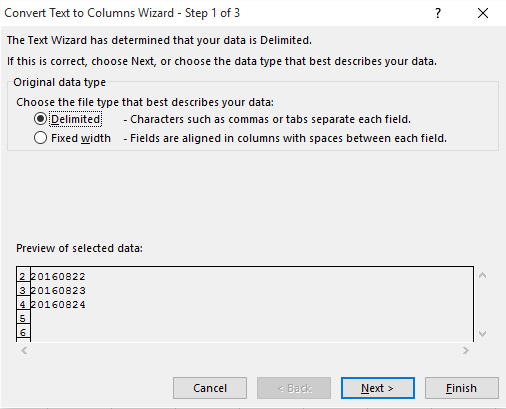
stringToLong(D5) Finally, press ENTER key and we will get our desired. In this article Overloads ToUInt64(Single)Ĭonverts the value of the specified single-precision floating-point number to an equivalent 64-bit unsigned integer.Ĭonverts the specified string representation of a number to an equivalent 64-bit unsigned integer.Ĭonverts the value of the specified 16-bit unsigned integer to the equivalent 64-bit unsigned integer.Ĭonverts the specified string representation of a number to an equivalent 64-bit unsigned integer, using the specified culture-specific formatting information. Method 3: User Function for Excel VBA Convert String to Long Now, type the following. using System Ĭonsole.WriteLine($"Unable to parse '", ++numVal) Ĭonsole.WriteLine("numVal cannot be incremented beyond its current value") Ĭonsole.WriteLine("Input string is not a sequence of digits.") Ĭonsole.WriteLine("The number cannot fit in an Int32.Converts a specified value to a 64-bit unsigned integer. The following example demonstrates both successful and unsuccessful calls to Parse and TryParse. You can check for a null or empty string before attempting to parse it by calling the String.IsNullOrEmpty method. A string whose value is null or String.Empty fails to parse successfully.

3" (note the embedded space), "10e1" ( float.TryParse works here), and so on. For example, you can use decimal.TryParse to parse "10", "10.3", or " 10 ", but you can't use this method to parse 10 from "10X", "1 0" (note the embedded space), "10. It means that when you call strtoll a few lines down, you're going to be calling that function as it's the most obvious candidate. Any white space within the string that forms the number causes an error. long long int strtoll (const char nptr, char endptr, int base) This line declares a function. The Parse and TryParse methods ignore white space at the beginning and at the end of the string, but all other characters must be characters that form the appropriate numeric type ( int, long, ulong, float, decimal, and so on). When calling a Parse method, you should always use exception handling to catch a FormatException when the parse operation fails.

If the string isn't in a valid format, Parse throws an exception, but TryParse returns false. The Parse method returns the converted number the TryParse method returns a boolean value that indicates whether the conversion succeeded, and returns the converted number in an out parameter. The Convert.ToInt32 method uses Parse internally. You use Parse or TryParse methods on the numeric type you expect the string contains, such as the System.Int32 type. Using a Convert method is more useful for general objects that implement IConvertible. It's slightly more efficient and straightforward to call a TryParse method (for example, int.TryParse("11", out number)) or Parse method (for example, var number = int.Parse("11")). You convert a string to a number by calling the Parse or TryParse method found on numeric types ( int, long, double, and so on), or by using methods in the System.Convert class.
 0 kommentar(er)
